


Scotland’s Best: Travel Guide
TouchScreenTravels
I approached Scotland’s Best: Travel Guide as the sort of travel app that has to prove its value beyond the first curious browse. A guide can feel useful for ten minutes, then become dead weight once the itinerary is set. My main question was whether this independent guide from TouchScreenTravels could remain helpful while planning, travelling, and remembering what I wanted to see.
It is a free Travel & Local app for anyone rated Everyone, with a current version of 2.1 and a minimum operating-system requirement of 10. The app has built a small but very positive audience, showing a 5.0 average from around 100 ratings and more than 10,000 installs. Those figures suggest a focused product rather than a mass-market platform, which is exactly how it feels: direct, destination-specific, and more interested in Scotland itself than in becoming an all-purpose travel service.
What the first week feels like
The first appeal is its narrow focus. Instead of asking me to sort through hotels, restaurants, transport bookings, user profiles, and promotional listings, the guide is built around the highlights of Scotland. That makes the early planning stage calmer. I can think in terms of places I want to experience rather than products I might buy.
That distinction matters when a trip is still taking shape. A broad travel app is useful for comparing prices and checking practical arrangements, but it can also turn the destination into a collection of transactions. This guide works better as a companion for deciding what deserves a place in the trip at all. I found that especially useful when an itinerary began with too many possible stops and no clear sense of priority.
The independent character is another part of the first-week appeal. I do not read it as a replacement for live booking services or navigation tools. I read it as a layer of editorial direction between inspiration and logistics. It helps answer the human question—what should I make time for?—before another app handles the exact route or reservation.
Related News

Why WhatsApp Messenger Still Makes Everyday Communication Feel Easy

Jurassic World: The Game Is the Better Dino Tycoon for Strategic Players

Threads in Real Life: Who Should Join, Lurk, or Leave

How SHEIN Turned Shopping Into an Endless Content Feed

How to Make Fortnite Feel Smarter on Mobile

Should You Switch to Microsoft Outlook on Mobile?
A practical way to use it is to browse before opening a map. I would mark down the attractions that genuinely interest me, group them by broad area, and only then check driving times, public transport, opening arrangements, or accommodation elsewhere. This prevents the usual mistake of building a route around whatever appears first in a search result.
The guide is also suitable for a traveller who does not want to plan every hour. Scotland rewards flexible days, and a destination guide can be more useful when it supplies a shortlist rather than a rigid schedule. I could use it in the morning to choose between nearby possibilities, especially when weather, energy, or a delayed journey changes the original plan.
A useful companion, not a complete travel desk
The most important expectation to set is that this is not the same kind of product as a map, booking platform, or real-time transport application. Those services are better when I need live directions, current availability, price comparisons, or immediate changes. Scotland’s Best: Travel Guide earns its place earlier in the process, when I am shaping the trip and trying to understand what I should not overlook.
Gallery
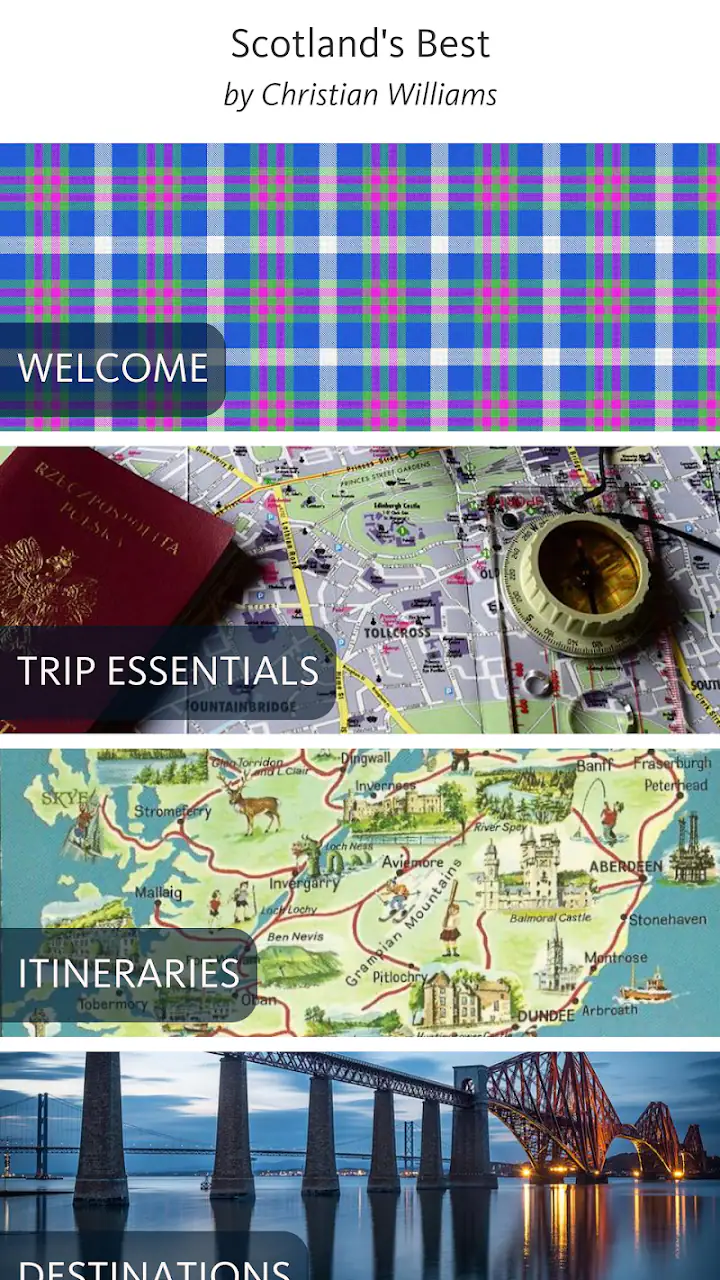
That division of labour is not a weakness by itself. In fact, it can make the app easier to use. I would rather have one focused guide for destination ideas and a separate tool for navigation than force a single crowded app to do everything. The trade-off is that I have to move between tools and verify practical details elsewhere before committing to a plan.
For a first visit, the guide should feel more valuable than it does for someone who already knows exactly which locations they want. A repeat visitor with a fixed route may only open it occasionally. Someone travelling with family or friends may find it more useful as a discussion starter: each person can identify the places that appeal to them, then the group can build a realistic route around those choices.
One non-obvious benefit is how it can reduce decision fatigue. Travel research often produces too many tabs and too many competing recommendations. I would use this app as a filter, not as an endless research feed. The moment I have a sensible shortlist, I would stop browsing and move to route planning. That habit keeps the guide from becoming another source of procrastination.
Why the value changes after the novelty
After the first week, the question becomes harder. A destination guide is naturally strongest before a trip, so its lasting value depends on whether I have another reason to return to it. Scotland’s Best: Travel Guide is unlikely to be an everyday app for most people. It is more like a reusable reference that becomes relevant during several travel moments: initial inspiration, itinerary revisions, the trip itself, and planning a future return.
That recurring usefulness is real, but it is seasonal and situational. I would not expect to open it every morning after coming home. I would expect to revisit it when planning another Scottish journey, helping a friend, extending a short break, or reconsidering a route that was too ambitious the first time.
This makes the app a better long-term fit for people who travel to Scotland more than once or who prefer to plan gradually. A guide can sit quietly for months and still justify its place if it saves time during the next planning session. The value is not constant activity; it is having a focused starting point when the destination becomes relevant again.
There is also a useful difference between a guide that inspires and a guide that dictates. I prefer the former here. A fixed itinerary can become frustrating when the weather changes or a road journey takes longer than expected. A collection of highlights gives me options, but I still need to make the final judgement based on distance, opening arrangements, mobility, children’s needs, and the pace of the group.
My recommended long-term workflow would be simple:
Use the guide during the idea stage to identify a manageable set of Scottish highlights.
Transfer those choices into a map or route planner and remove stops that create unnecessary backtracking.
Check current practical details with the relevant official or live service before travelling.
Keep the guide available during the trip as a reminder of alternatives when the original plan stops making sense.
This workflow exposes both the strength and the limitation. The app can improve the quality of my choices, but it does not remove the need for other travel tools. I would not rely on it alone for time-sensitive information. I would rely on it to keep the destination itself at the centre of the planning process.
Who gets the most repeat value?
The strongest audience is a curious traveller who wants an independent overview rather than a commercial booking funnel. It also suits people who enjoy building their own route, couples deciding between different styles of break, and families looking for a shared list of possibilities before narrowing it down.
It is less convincing for someone who wants one application to manage every part of a trip. If my priority were instant directions, accommodation deals, restaurant reservations, or live disruption alerts, I would choose specialist alternatives first. The guide can sit beside those tools, but it does not replace their particular strengths.
I also think experienced Scotland travellers should treat it as a refresher rather than an essential daily resource. If I already have a carefully maintained personal list, detailed maps, and trusted local sources, the app may add less. Its advantage is strongest when I need orientation and inspiration, not when every decision has already been made.
Maintenance, updates, and the effort it asks from me
The maintenance burden is modest from the user’s side because a focused guide does not require the constant interaction associated with social travel platforms. I am not managing a public profile, posting updates, or maintaining a complicated booking history. That makes it easier to keep around without feeling that the app is demanding attention.
There is, however, a different kind of maintenance that belongs to the traveller. I still need to verify details that can change: opening arrangements, access conditions, seasonal availability, transport, and local restrictions. A destination guide can remain useful while individual practical facts move on. I would therefore treat its recommendations as planning guidance, not as a final operational checklist.
That is an important habit for any non-live travel resource. Before leaving, I would make a separate note of the details that could ruin a day if they were outdated. I would also avoid filling a schedule with distant highlights simply because they look appealing in isolation. The app may help me discover them, but a map and an honest travel-time estimate must decide whether they belong together.
The free entry point lowers the cost of trying it. There are in-app purchases priced at $5.49 per item, so I would look carefully at what is included before paying for anything. The right question is not whether the app is inexpensive in general, but whether the additional material would change my decisions enough to justify the purchase for my particular trip.
That purchase structure introduces a small point of friction. A traveller who expects the free experience to contain every useful part may feel uncertain when an optional item appears. I prefer to decide based on a concrete need: if the extra content improves a route I am genuinely planning, it may be worthwhile; if I am only browsing casually, I would keep the free experience and avoid buying on impulse.
The app’s age is also worth considering in a practical way. It was released on December 14, 2016, and the current version is 2.1. That does not automatically make it unsuitable, but it does make my verification habit more important. I would pay attention to how comfortably it runs on my device, confirm that the operating-system requirement is met, and use current external sources for details that depend on changing conditions.
On the positive side, the low technical threshold means it remains accessible to devices running operating system 10 or later. I would still download it before travelling rather than waiting until I am standing outside an attraction with weak reception. Any guide is more useful when I have already opened its relevant sections and know how I intend to use it.
Where fatigue can set in
The first source of fatigue is repetition. Scotland has an enormous range of landscapes and experiences, but a highlights-focused guide naturally encourages attention toward the best-known choices. After the initial discovery phase, I may want more local, specialist, or highly current recommendations than a compact destination guide is designed to provide.
The second is the gap between inspiration and execution. An attractive place can be a poor addition to a particular itinerary if it requires a long detour. I have learned not to confuse a good individual recommendation with a good route. The app helps with the first judgement; I still need to make the second.
A third issue is divided attention between applications. I might discover a place here, check its position in a map, investigate practical details through an official source, and then use a weather or transport service on the day. That is normal for travel planning, but users who value a single integrated dashboard may find the arrangement tiring.
There is also a risk of overplanning. A highlights guide can make every stop feel important, especially when I am excited about a first visit. My best use of it is deliberately selective: choose fewer anchors, leave room for slow travel, and keep a couple of alternatives for the inevitable change of plan. The app is more helpful when it expands my options than when it turns them into obligations.
Finally, the purchase model may interrupt the feeling of a simple free guide. I would not call that a reason to reject it, but I would make the decision early. Either use the free material as a lightweight reference or identify a specific reason for buying an item. Uncertainty is more frustrating than the cost itself.
My lasting verdict after the travel excitement fades
I think Scotland’s Best: Travel Guide earns lasting space for the right kind of traveller, but not because it is an all-purpose travel solution. Its value comes from focus. TouchScreenTravels has made a guide that I would use to shape a Scottish trip, challenge an overfamiliar plan, or give structure to a vague wish to explore more of the country.
I would recommend keeping it installed during the planning period and the journey, especially for a first visit. I would use it before maps and booking tools, then return to it when I needed an alternative or wanted to remember why a particular stop was worth the effort. Once the trip ended, I would probably use it only occasionally, which is perfectly acceptable for a destination-specific reference.
The app is not the right choice if I need live navigation, booking management, or a constantly updated local feed. In those situations, specialist services are better. It is also not ideal for someone who already has a detailed personal itinerary and no interest in exploring beyond it. The guide adds the most when I am still making choices.
My final recommendation is to judge it as a planning companion rather than a complete travel desk. The free access makes that trial straightforward, while the optional $5.49 items deserve a deliberate decision based on the trip I am actually arranging. I would verify time-sensitive details elsewhere, avoid cramming every highlight into one route, and use the guide as an editorial filter.
Its lasting strength is simple: it helps me decide what Scotland is worth making time for. That is a narrower promise than a full travel platform, but it is also a useful one. For travellers who appreciate a focused independent guide and are willing to pair it with practical tools, Scotland’s Best: Travel Guide remains a worthwhile companion after the first browse has lost its novelty.
FAQs for Scotland’s Best: Travel Guide
What is Scotland’s Best: Travel Guide, and who is it designed for?
Scotland’s Best: Travel Guide is a travel-planning app for people exploring Scotland, whether they are visiting for the first time or looking for new places to discover. It can help users find notable attractions, scenic areas, cultural highlights, food and drink recommendations, and practical travel inspiration. It is suitable for tourists, couples, families, road-trippers, and independent travelers who want ideas in one convenient mobile guide.
Does Scotland’s Best: Travel Guide work without an internet connection?
Offline availability can depend on the specific version of the app and the content provided by its publisher. Travelers should check whether maps, attraction details, or saved recommendations can be downloaded before leaving home. Even when some information is available offline, live features such as updated opening hours, directions, booking links, weather, or location-based suggestions may still require mobile data or Wi-Fi.
Can the app help me plan a complete Scotland itinerary?
The app can be useful for building an itinerary by presenting destinations, attractions, and travel ideas, but users should not assume it replaces detailed trip planning. Driving times, ferry schedules, accommodation availability, seasonal opening hours, and weather conditions can significantly affect a Scotland trip. It is best used alongside official tourism websites, transport providers, attraction pages, and reliable navigation tools.
Does Scotland’s Best: Travel Guide include information about remote areas and outdoor activities?
The guide may highlight scenic regions, historic sites, islands, beaches, walking areas, and other outdoor experiences across Scotland. However, conditions in remote locations can change quickly, and app listings may not provide the latest information about trail closures, parking, public transport, access restrictions, or safety risks. Before hiking or visiting isolated places, check official local sources and prepare appropriately for changing weather.
Is Scotland’s Best: Travel Guide free to download, and are there any extra costs?
The download price and available features depend on the Android or iOS listing and the publisher’s current business model. Some versions may be free, while others may include paid content, advertising, subscriptions, or optional purchases. Travel expenses are separate from the app, including entrance fees, transportation, parking, accommodation, and reservations. Review the store description and in-app purchase details before downloading.
Pros
- Detailed guides to Scotland’s major cities
- landmarks
- and scenic regions.
- Useful travel information for planning routes
- visits
- and sightseeing stops.
- Helps discover local attractions beyond the most popular tourist destinations.
- Convenient reference for travelers exploring Scotland independently.
- Suitable for building flexible itineraries around personal interests.
Cons
- Some information may become outdated as opening hours and prices change.
- Coverage and detail may vary between destinations and attractions.
- Offline access may be limited
- requiring mobile data while traveling.
- The number of recommendations can feel overwhelming for first-time visitors.
- Some features may work better with location services enabled.


